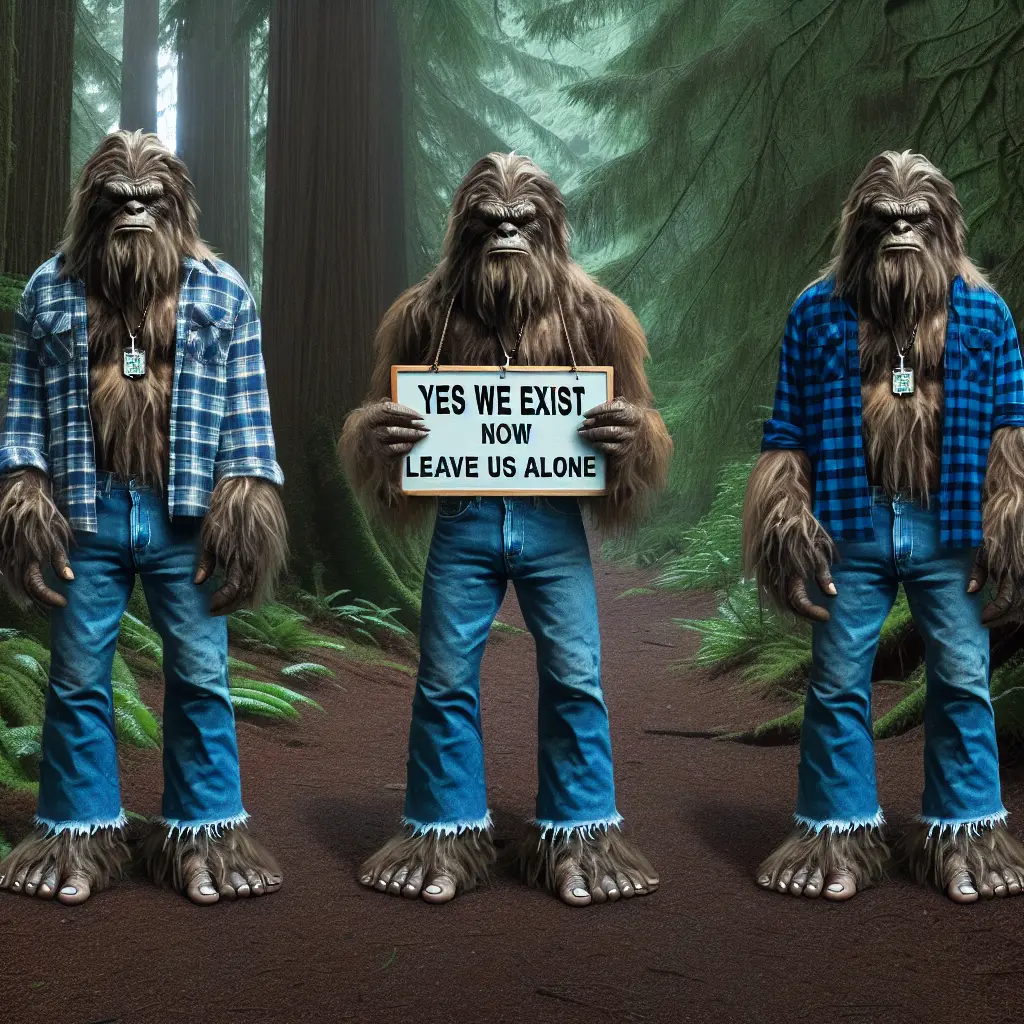
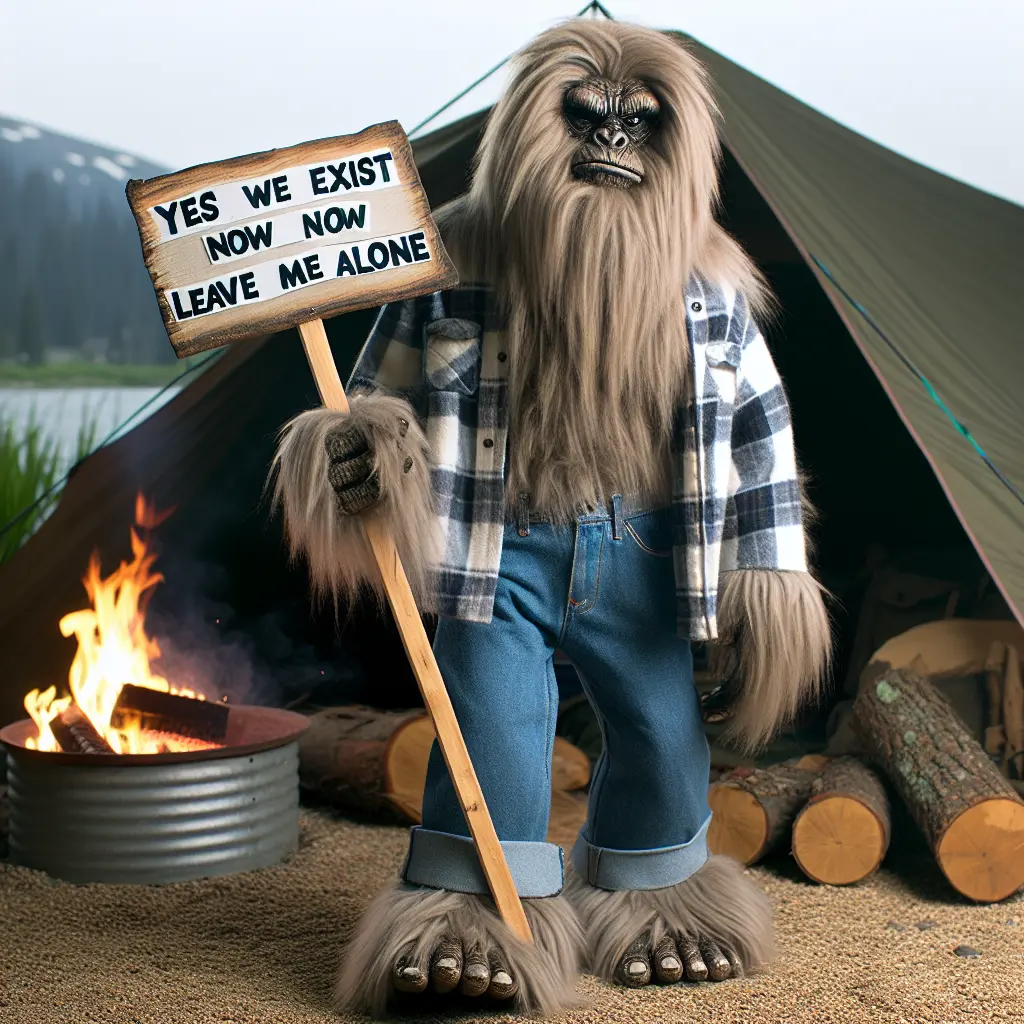
Welcome Sasquatch Lovers

Somewhere between the mist of old-growth forests and the edges of human imagination, a quiet question lingers: what if we’ve been getting it wrong all along? For generations, stories of Sasquatch have been treated as curiosities—campfire folklore, blurry photos, and late-night debates. But what if these stories point to something deeper? Something deserving not of ridicule, but of respect?
Welcome to Leave Sasquatch Alone Society—a place for those who believe that mystery doesn’t need to be conquered to be meaningful. Here, we explore the possibility that Sasquatch, whether flesh-and-blood creature or cultural symbol, represents one of the last untouched threads connecting us to the wild. In a world obsessed with discovery and domination, we ask a different question: what if the most ethical choice is to simply let it be?
This space is for curiosity without intrusion, for wonder without exploitation. Whether you’re a skeptic, a believer, or just someone drawn to the unknown, you’re invited to reconsider what it means to coexist with the unexplained—and why sometimes, the best way to understand something is to leave it alone.

Why you should leave Sasquatch Alone!

Why You Should Leave Bigfoot and Sasquatch Alone. Hunting Bigfoot and Sasquatch isn’t just unnecessary—it’s downright risky for people, without offering real benefits to the creatures or to science. Instead of chasing elusive footprints and eerie howls, you can learn and contribute safely from home.
In this post, you’ll discover:
  • The dangers of cryptid hunting
  • The potential impact on Bigfoot populations and habitats
  • Ethical research methods
  • How to support the cause responsibly
What Risks Do You Face When Hunting Bigfoot?When you head into dense forests or rugged mountains searching for Sasquatch evidence, you expose yourself to serious hazards:
  • Treacherous terrain: Steep inclines, loose rocks, and slippery stream crossings can lead to falls or sprained ankles.
  • Wildlife encounters: Bears, mountain lions, and venomous snakes share Bigfoot’s rumored stomping grounds.
  • Navigation challenges: Poor cell reception and unmarked trails increase the chance of getting lost for hours or days.
  • Weather extremes: Sudden storms or cold snaps can quickly turn an adventure into a survival situation.
Even experienced hikers have required rescue after simple mistakes. Rather than risking injury—or worse—consider safer alternatives to explore the legend.
How Does Hunting Affect Bigfoot and Their Habitat?Assuming Bigfoot exists as a solitary or low-density species, human intrusion can cause lasting harm:
  • Stress and disturbance: Loud voices, flashlights, and traps can disrupt feeding, mating, and resting patterns.
  • Habitat degradation: Off-trail excursions trample vegetation, compact soil, and pollute waterways.
  • Non-target captures: Snares or traps intended for “proof” often injure local wildlife like deer or coyotes—and possibly cryptids.
  • Noise pollution: Motors, generators, and drones can drive creatures away from their natural habitats.
Stepping back helps preserve ecosystems and allows any undiscovered species to exist undisturbed.
Why Are Cryptids Safer in the Wild Than Hunters?It may seem like hunters have the advantage—but in Bigfoot’s environment, humans are at a clear disadvantage:
  • Local expertise: If Sasquatch exists, it knows the terrain far better than any visitor ever could.
  • Physical adaptation: Reports suggest traits like dense fur, long legs, and natural stealth suited for survival.
  • Psychological pressure: Fear and excitement can impair judgment and lead to risky decisions.
  • Limited resources: Carrying enough food, water, and emergency gear is challenging—especially on extended trips.
In short, the wilderness is not our domain. Pursuing unverified sightings isn’t worth the risk.
How Can You Study Bigfoot Responsibly?Curiosity doesn’t require danger. Ethical, non-invasive research methods include:
  • Remote camera setups: Motion-activated cameras capture footage without human interference.
  • Environmental DNA (eDNA) sampling: Water or soil samples can be tested for unknown genetic traces.
  • Acoustic monitoring: Audio recorders document unexplained calls or knocking sounds.
  • Community science networks: Encourage hikers to report findings through shared databases.
  • Educational outreach: Host webinars or local events promoting “leave no trace” principles.
These methods prioritize both safety and environmental respect.
How to Support the Cause Without Heading Into the Woods. You don’t need to chase Bigfoot to make a meaningful impact:
  • Join online forums and communities focused on ethical cryptid research
  • Participate in virtual events like livestream Q&As or workshops
  • Advocate for conservation policies that protect remote habitats
  • Spread awareness about safe, non-invasive research methods
  • Support organizations funding education and remote monitoring initiatives
The Leave Squatch Alone Society brings together enthusiasts who value respect, safety, and responsible exploration.
Conclusion. The legend of Bigfoot and Sasquatch captures our imagination—but hunting these cryptids poses real risks to people and potential harm to their habitats. By embracing ethical research methods and supporting community-driven science, you help protect both curious minds and the mysterious creatures we seek to understand.
It’s time to support the movement to leave Bigfoot and Sasquatch alone. Consider backing the cause by purchasing clothing and accessories from the Leave Squatch Alone Society. Join today and wear your values with pride—championing safety, respect, and responsible discovery.

The Cryptid Mystery

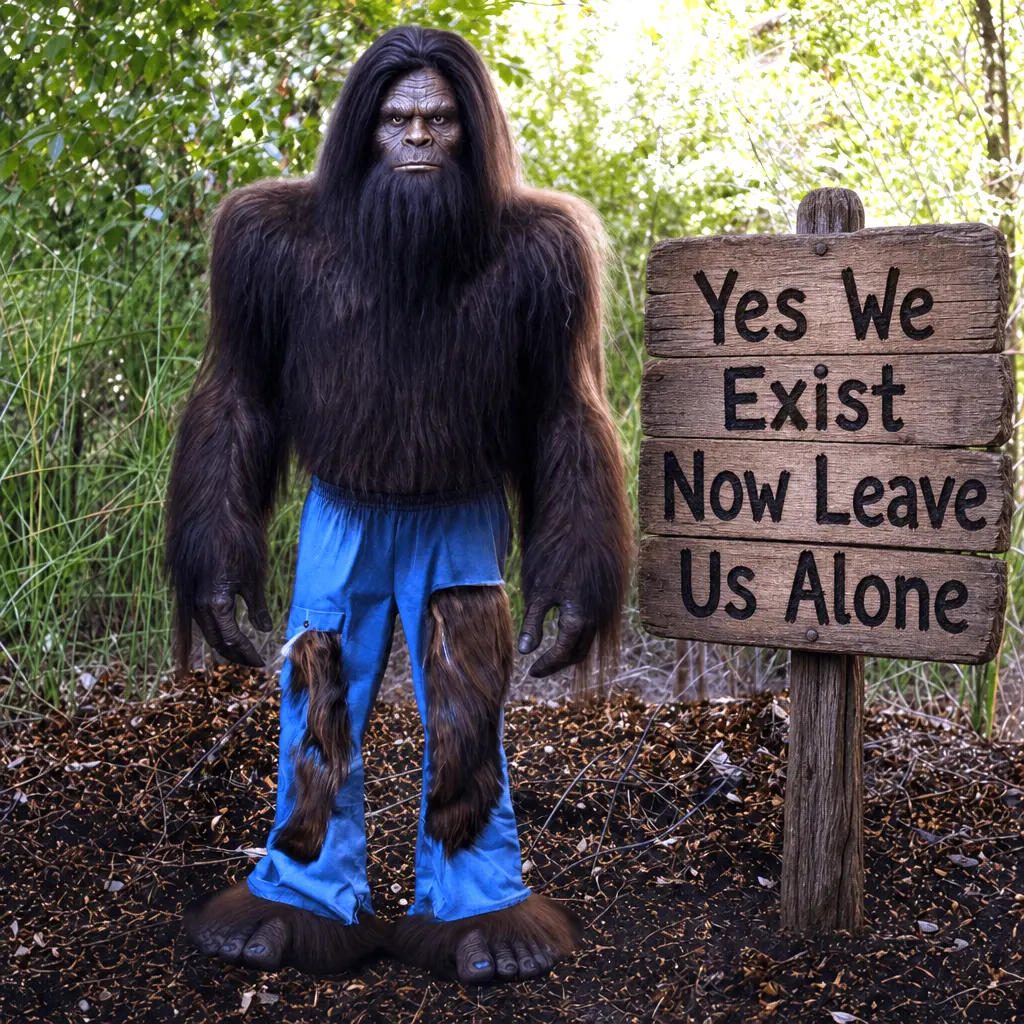
Rethinking the Bigfoot Mystery: Curiosity Without ConsequencesThe mystery of Bigfoot has fascinated generations—drawing hikers, storytellers, and researchers deep into the wilderness in search of answers. But what if the most meaningful way to engage with the legend isn’t by chasing it, but by changing how we think about it?
In this follow-up, we’ll explore how curiosity can coexist with caution, why mystery still has value without proof, and how shifting our perspective can lead to a more responsible and rewarding connection with the unknown.
Why the Mystery Matters More Than the CaptureFor many, the goal of cryptid research is proof—a photograph, a sample, a definitive answer. But there’s something uniquely powerful about a mystery that remains unsolved.
Bigfoot exists in a space between folklore and possibility. That space invites imagination, storytelling, and exploration without requiring disruption. Once something is proven, categorized, and studied under a microscope, it often loses the very magic that made it compelling in the first place.
Preserving the mystery allows it to continue inspiring creativity, curiosity, and respect for the natural world.
The Problem With “Proof at Any Cost”The desire to prove Bigfoot’s existence has led some enthusiasts to take extreme measures—trespassing on protected lands, setting traps, or disturbing fragile ecosystems.
This approach raises an important question: What are we willing to sacrifice for proof?
  • Is it worth damaging ecosystems for a single piece of evidence?
  • Should wildlife be put at risk for the sake of curiosity?
  • Does proving Bigfoot’s existence justify potentially exposing it to exploitation?
When viewed through this lens, the pursuit of proof begins to feel less like discovery—and more like intrusion.
A New Approach: Observation Over InterferenceInstead of treating Bigfoot as something to be captured or confirmed, we can adopt a mindset rooted in observation and respect.
This approach emphasizes:
  • Patience over pursuit
  • Documentation over disruption
  • Respect over control
Nature has always revealed its secrets slowly. By stepping back, we allow for the possibility of discovery without forcing it.
Finding Wonder Closer to HomeYou don’t need to trek into remote wilderness to experience the sense of wonder that Bigfoot represents.
Moments of mystery and discovery exist all around us:
  • The sound of unknown wildlife at night
  • Unexplained tracks on a quiet trail
  • Stories passed down through local communities
  • The feeling of being alone in a vast, natural space
These experiences tap into the same curiosity that fuels Bigfoot lore—without requiring risk or interference.
The Role of Storytelling in Cryptid CultureBigfoot isn’t just a creature—it’s a cultural phenomenon shaped by stories, eyewitness accounts, and shared experiences.
Storytelling plays a crucial role in keeping the legend alive:
  • It connects communities through shared curiosity
  • It preserves regional folklore and traditions
  • It allows people to engage with mystery in a creative way
By embracing storytelling, we shift the focus from proving Bigfoot to experiencing the idea of Bigfoot.
Supporting a Respectful Future for Cryptid ExplorationIf the next generation is going to engage with cryptids, it’s worth setting a better example now.
That means promoting:
  • Ethical research practices
  • Environmental conservation
  • Respect for wildlife and unknown species
  • Curiosity grounded in responsibility
Movements like the Leave Squatch Alone Society aim to redefine what it means to be a Bigfoot enthusiast—focusing on appreciation rather than pursuit.
ConclusionBigfoot may or may not exist—but the impact of how we search for it is very real.
By choosing curiosity without consequences, we protect ecosystems, reduce risk, and preserve the sense of wonder that makes the legend so enduring. Sometimes, the most meaningful discoveries come not from capturing the unknown—but from learning how to live alongside it.
The mystery is still out there. And maybe, that’s exactly where it belongs.